 Reviews

 Proudly American

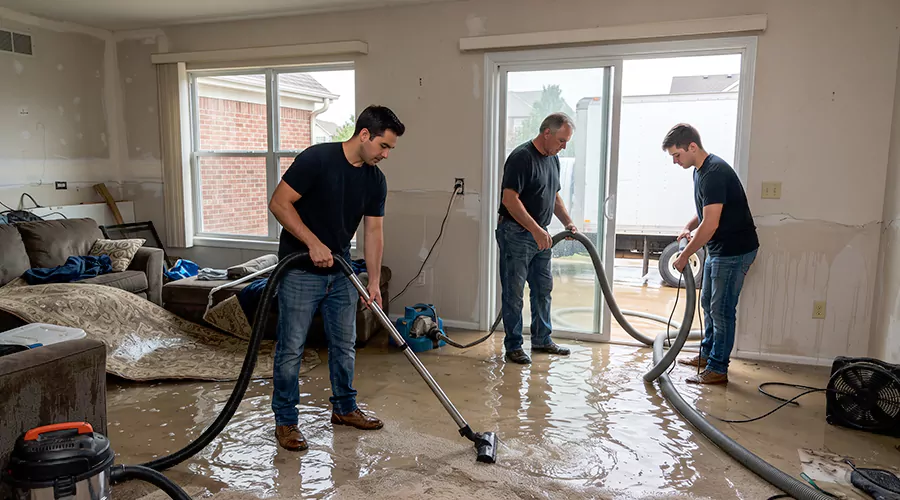
Flood damage restoration is the process of removing floodwater and drying a property before damaged materials are cleaned or repaired. Wet materials should be cleaned and dried within 24 to 48 hours when possible because prolonged moisture can support mold growth.
Flood restoration goes beyond pumping water from the floor. Floodwater can reach drywall or insulation while also moving beneath flooring. Some materials can be cleaned while others need removal because floodwater can contain sewage or other contaminants.
What Does Flood Damage Restoration Include?
Flood damage restoration covers the work needed to take a property from a flooded condition to a dry and usable state. The process normally begins with safety checks and water removal. Drying follows before damaged finishes are repaired or replaced.
Common stages include:
- Inspecting the affected area
- Identifying contamination
- Removing standing floodwater
- Removing damaged materials
- Cleaning salvageable surfaces
- Drying structural materials
- Monitoring remaining moisture
- Repairing damaged finishes
Flood damage remediation can overlap with restoration because both deal with contamination and moisture. The term restoration usually describes the broader recovery process that can continue through final repairs.
How Does the Flood Restoration Process Work?
The process works by removing liquid water first and then addressing moisture left inside the structure. Each stage prepares the property for the next one. Repairing finishes before hidden moisture is removed can trap damp materials behind new construction.
| Stage | Main Purpose |
|---|---|
| Safety assessment | Identify immediate hazards |
| Water removal | Extract standing floodwater |
| Material evaluation | Decide what can remain |
| Cleaning | Remove flood residue |
| Drying | Reduce moisture in the structure |
| Verification | Check moisture levels |
| Repair | Restore damaged finishes |
Flood damage restoration should follow this order because visible water is only part of the problem. For example, a living room can appear dry after pumping while the wallboard still contains moisture several inches above the floor.
Why Is Floodwater Different From a Plumbing Leak?
Floodwater can carry bacteria or other contaminants that are not normally present in clean plumbing water. Water entering during storms can contact sewage and outdoor debris before reaching a home. That difference affects which wet materials can safely remain. Black water flood damage often requires more material removal than a clean supply-line leak. Porous materials deserve special attention because they can absorb contaminated water below their visible surfaces. Carpet padding or insulation may therefore require removal even when nearby hard surfaces can be cleaned.
Which Materials Can Be Saved After a Flood?
Some hard materials can often be cleaned once the floodwater is removed. Porous materials are more difficult because water can penetrate below the surface. The condition of each material also depends on how long it remained wet.
Materials that may be salvageable include:
- Metal surfaces
- Glass
- Some sealed wood
- Concrete
- Tile
Materials that often need closer evaluation include:
- Drywall
- Insulation
- Carpet padding
- Upholstered furniture
- Fiberboard
- Paper products
EPA guidance advises removing materials that cannot be cleaned and dried properly after flooding.
How Long Does Flood Damage Drying Take?
Flood damage drying often takes several days after standing water has been extracted, although heavily saturated materials can require a week or longer. Drying time depends on the depth of moisture and the materials involved. Concrete or wood assemblies can remain damp after exposed surfaces look dry.
A general timeline is:
| Condition | Approximate Drying Period |
|---|---|
| Light surface moisture | 1 to 3 days |
| Moderate room flooding | 3 to 5 days |
| Multiple wet materials | 3 to 7 days |
| Heavy structural saturation | 1 week or longer |
The calendar alone does not determine when drying is complete. Moisture readings should show that affected materials have returned to an acceptable dry condition before repairs cover them.
What Happens if Flood Damage Is Not Restored Quickly?
Delayed restoration allows water to move deeper into building materials. Drywall can soften while flooring may swell. Mold also becomes more likely when wet materials stay damp beyond the first 24 to 48 hours.
Damage can progress like this:
| Stage | Possible Condition |
|---|---|
| First hours | Water spreads beneath finishes |
| First day | Walls or flooring absorb moisture |
| 24 to 48 hours | Mold risk increases |
| Several days | Odor or swelling can appear |
| Extended exposure | More materials may require removal |
Fast water and flood restoration can limit how far that progression continues.
What Warning Signs Show Hidden Flood Damage?
Hidden flood damage often remains after standing water is gone. Physical changes near the bottom of walls can reveal moisture inside finished materials. Odor can also point to areas that have not dried completely.
Watch for these signs:
- Drywall feels soft.
- Baseboards begin swelling.
- Paint starts bubbling.
- Flooring edges rise.
- Carpet remains damp underneath.
- Cabinets swell near the floor.
- A musty smell develops.
- Water stains continue changing.
- Indoor humidity remains high.
- Visible mold appears.
A dry-looking floor does not prove the room is ready for reconstruction.
What Can You Check Yourself?
A moisture comparison can help show whether the affected area is drying. Use a moisture meter suitable for the material and compare the flooded area with similar dry material elsewhere in the property.
Follow this simple process:
- Choose a dry reference area.
- Record its moisture reading.
- Test the affected area.
- Mark the test location.
- Repeat the reading the next day.
- Look for steady improvement.
Do not open walls simply to search for moisture when electrical wiring could be concealed behind the surface.
When Should You Call a Professional?
Professional help is appropriate when floodwater covers a large area or contamination is likely. Structural damage also changes what can be safely handled. Electrical exposure is another reason to avoid entering or cleaning the affected area without proper evaluation.
Consider emergency flood restoration when:
- Sewage may be present.
- Several rooms are flooded.
- Electrical equipment became wet.
- Drywall is heavily saturated.
- Insulation became wet.
- Flooring has lifted.
- Mold is already visible.
- The structure appears damaged.
Large losses may require commercial extraction equipment followed by controlled dehumidification.
How Can Future Flood Damage Be Reduced?
Flood prevention depends on how water entered the property. Drainage problems need different corrections than plumbing failures. Routine inspections can still reduce the chance that minor water entry becomes widespread damage.
Useful preventive steps include:
- Test sump pumps before storm season.
- Keep gutters clear.
- Direct downspouts away from foundations.
- Install water alarms in basements.
- Keep belongings above basement floors.
- Inspect foundation walls after heavy rain.
- Address recurring seepage promptly.
Prevention also makes later cleanup easier because fewer porous materials become exposed.
Conclusion
Flood damage restoration removes floodwater and addresses the moisture or contamination left behind. The process includes extraction followed by cleaning and structural drying before repairs begin. Wet materials should ideally be cleaned and dried within 24 to 48 hours. If floodwater reaches electrical systems or several finished rooms, professional assessment can help define what can safely remain.
Frequently Asked Questions
Is flood damage restoration the same as water damage restoration?
They are related, but floodwater often carries greater contamination risk than a clean plumbing leak. This can change cleaning and material-removal requirements.
Does all drywall need to be removed after flooding?
No. The decision depends on contamination and saturation. Drywall that cannot be cleaned or dried properly may need removal.
Can flooded carpet be saved?
Sometimes after limited clean-water exposure. Carpet exposed to contaminated floodwater is more likely to require removal.
How soon should flood cleanup begin?
Begin as soon as the property is safe to enter. Wet materials should ideally be cleaned and dried within 24 to 48 hours.
Does flood restoration include repairs?
It can. Some projects stop after cleanup and drying while others continue through drywall or flooring replacement.
Can mold develop after a flood?
Yes. Mold can begin growing when building materials remain damp. Fast water removal and moisture control reduce that risk.